Tattoo Portfolio to Bookings: How We Doubled Appointments for a Treasure Coast Artist with Custom Web Design and Local SEO
At a Glance
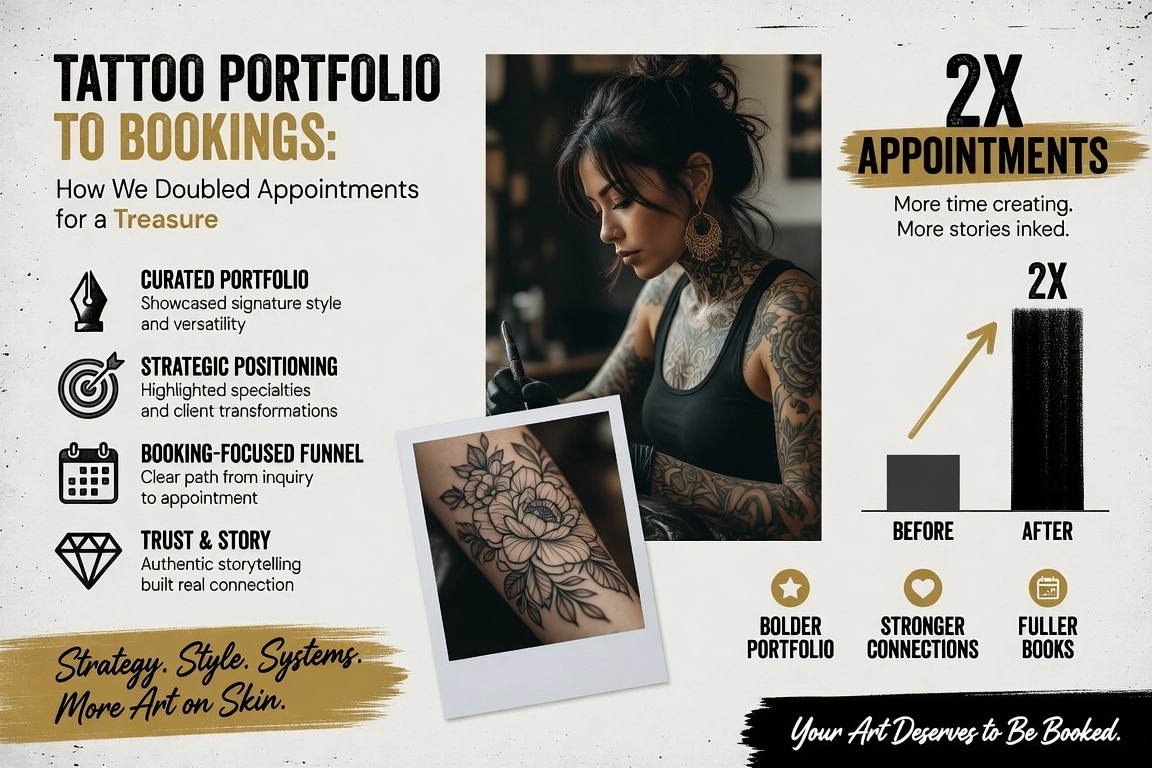
A Treasure Coast tattoo artist had genuinely exceptional work and a website that buried it. Slow-loading images with generic filenames gave Google nothing to read, and the contact form pulled mostly low-intent inquiries. After a custom rebuild and a full local SEO overhaul, appointment requests roughly doubled, search visibility improved for style-specific local terms, and the quality of incoming leads went up alongside the quantity.
- 31 portfolio images renamed and re-tagged with descriptive, keyword-aware filenames and alt text
- Dedicated artist bio pages paired with curated, fast-loading style galleries
- Appointment requests roughly doubled within a few months
- Lead quality improved: fewer price-shoppers, more collectors ready to commit
- Studio began ranking for local, style-specific searches it had been invisible for
A great tattoo does not sell itself online. We were reminded of that this year working with a Treasure Coast artist whose work was genuinely exceptional — and whose website was quietly costing him bookings.
The Problem: World-Class Art, Invisible Online
The portfolio was the kind most studios would envy: clean linework, ambitious color work, a clear signature style. But the website buried it. Images loaded slowly, carried generic filenames like IMG_4471.jpg, and gave Google nothing to read. Search traffic was thin, and the contact form pulled a steady trickle of low-intent messages like "how much for something small?" with almost nothing from collectors ready to commit to a custom piece.
He was not losing on talent. He was losing on visibility and presentation.
This is one of the most common patterns we see in creative industries on the Treasure Coast. The skill is there. The client base exists. But the website is an afterthought built years ago on a template, never touched since, and doing almost nothing to connect exceptional work with the people who would pay well for it.
What We Built
We rebuilt the site around two ideas: make the work the hero, and make it findable.
Portfolio-first design
Each artist got a dedicated bio page paired with a curated, fast-loading gallery. Instead of one chaotic image dump, visitors landed on a focused story — style, specialties, and the artist's best pieces front and center. That framing does quiet work: it sets expectations before anyone fills out a form. A collector looking for black and grey realism sees exactly that. Someone after fine-line botanical work finds a gallery built around it. The right person self-selects before they ever send a message.
SEO down to the file name
We renamed and re-tagged every portfolio image. 31 in a single artist's gallery alone. Generic filenames like IMG_4471.jpg give Google zero information. Descriptive, keyword-aware names like custom-black-grey-sleeve-port-st-lucie.webp tell Google exactly what the artist does and where they do it. We matched every image with specific alt text: black and grey realism, fine-line botanical, custom sleeve work. Then we tightened page titles, headings, and local signals so the site started showing up for the searches that actually matter on the Treasure Coast.
Speed and structure
Compressed images and a cleaner build cut load times significantly. This matters for two reasons. First, Google uses page speed as a ranking factor. Second, a serious collector forms an impression of a studio in the first three seconds. A fast, intentional site signals professionalism before a single image loads. A slow, cluttered one signals the opposite, regardless of how good the work is.
The Results
Within a few months, the numbers moved in the right direction across every metric that matters for a studio trying to grow:
- Appointment requests roughly doubled compared to the prior period.
- Organic search visibility climbed for local, style-specific terms. The studio started appearing for custom tattoo searches it had been invisible for.
- Lead quality went up alongside quantity. Fewer tire-kickers, more inquiries from people who had already seen the work and wanted that artist specifically.
That last point is the one studio owners feel most. A site built to showcase premium work naturally filters out price-shoppers and pulls in clients who value the craft. The kind who come back, refer friends, and build a real relationship with their artist over years. That is a very different business than one chasing volume.
Why This Matters for Serious Studios
Most tattoo websites are an afterthought: a logo, a slow gallery, an Instagram link. That setup is fine if you are chasing volume and competing on price. It is a real problem if you are building a reputation and want your booking calendar to reflect the level of your work.
The artists we see struggle most with bookings are often the most talented ones. They have put everything into the craft and very little into the infrastructure that connects them with the right clients. Meanwhile, studios with average work but strong websites and solid local SEO are filling their calendars and setting higher rates because their online presence signals that they can.
Good web design and local SEO are not decoration. They are how the right clients find you, understand what you do, and decide to book before they ever walk through the door.
What Applies to Your Studio
If any of this sounds familiar, the fix is usually more targeted than a full rebuild. Here is what to look at first:
- Pull up your website on your phone. Count the seconds before images load. If it takes more than three seconds, you are losing visitors before they see your work.
- Check your image filenames. If they look like camera roll exports, Google is reading them as blank. Rename them with your style, your city, and a brief description.
- Search for yourself. Type your primary style and your city into Google. If you are not on the first page, potential clients are not finding you — they are finding someone else.
- Read your last ten contact form submissions. If most of them are asking for a price on "something small," your site is attracting the wrong audience or not filtering for the right one.
Each of these is a symptom with a specific fix. A free audit from Gobi Hosting will show you exactly which ones apply to your site and what to address first.
Frequently Asked Questions
Why are tattoo artists not getting bookings from their website?
Most tattoo websites fail to convert because portfolio images load slowly and have generic filenames that Google cannot read, there are no local SEO signals telling Google what city or style the artist serves, and the site does not guide serious collectors toward a booking form. A fast, well-structured portfolio with keyword-aware image tags and a clear call to action typically doubles appointment requests compared to a basic template site.
Does renaming portfolio image filenames really help with SEO?
Yes, significantly. Generic filenames like IMG_4471.jpg give Google no information about the image content. Renaming with descriptive names like fine-line-botanical-tattoo-jensen-beach.webp and adding matching alt text tells Google exactly what style and location the artist is associated with. In this Treasure Coast case, renaming and re-tagging 31 images in one artist's gallery contributed directly to the studio ranking for terms it had previously been invisible for.
How long does it take to see results from tattoo studio SEO?
In this case, meaningful results appeared within a few months of rebuilding the site and optimizing the portfolio images. Studios with strong existing work and a weak web presence tend to see faster improvements because the quality of the portfolio does the selling once the visibility is in place.
What should a tattoo artist website include to attract serious collectors?
A dedicated artist bio page paired with a curated style gallery, descriptive alt text on every portfolio image, style-specific pages for specialties like black and grey realism or fine-line work, a clear booking or consultation form, and strong local SEO signals throughout. This combination filters out price-shoppers and draws in clients who have already decided on the style and artist before they make contact.
Work With a Small Number of Studios Who Take It Seriously
We work with artists and studios who take their craft and their business seriously. If your portfolio deserves better than the website it is sitting on, let's map out what a custom build and a real local SEO plan could do for your booking calendar.
Start the ConversationYou can also request a free website audit first if you want a plain-English look at what is working and what is not before committing to anything.