AI Is Rewriting the Rules of Branding in 2026: What Treasure Coast Businesses Need to Know
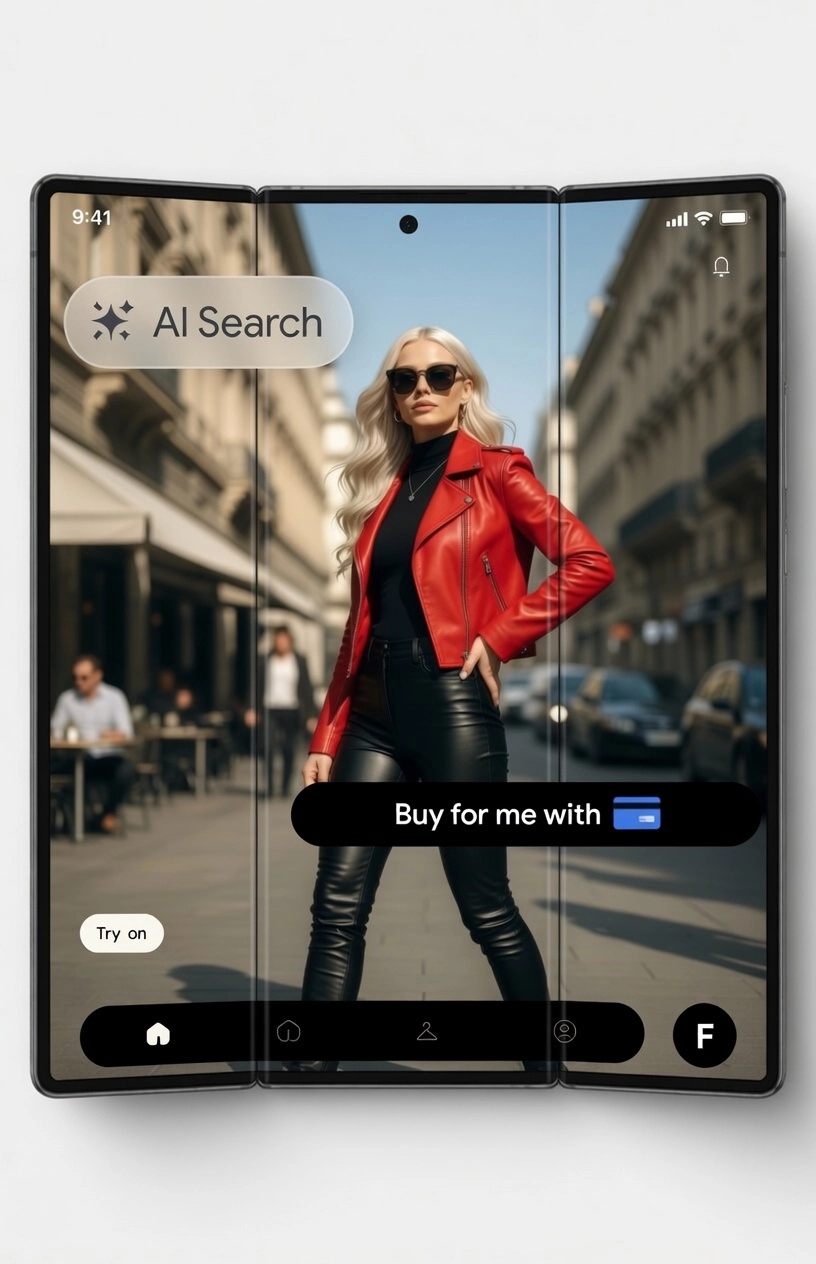
The world's largest brands spent 2025 running AI experiments. In 2026, they are integrating those lessons at full speed and the results are rewriting what it means to build a brand that earns trust, drives desire, and converts customers in an AI-powered world. The exact same forces reshaping Unilever and Google's marketing are reshaping how a plumber in Port St. Lucie, a restaurant in Jensen Beach, or a medical practice in Stuart gets found, chosen, and remembered.
The Consumer Journey Has Fundamentally Changed
Google's February 2026 report on the "Super-Empowered Consumer" opens with a simple but profound observation: consumers no longer go shopping. They are always shopping. The traditional funnel, where someone moves from awareness to consideration to purchase in predictable steps, is gone. In its place is a fluid, simultaneous loop of searching, streaming, scrolling, and shopping that AI has made faster and more decisive than ever before.
The numbers behind this shift are significant. Google now processes over 5 trillion searches annually. AI Mode, Google's conversational search experience, reached 75 million daily active users by the end of 2025. Queries in AI Mode are three times longer than traditional keyword searches, and nearly one in six AI Mode queries now use voice or images rather than text. Consumers are arriving at purchase decisions more informed and with stronger preferences than at any point in marketing history.
For a Treasure Coast business owner, this creates both a challenge and an enormous opportunity. The challenge: you cannot afford a weak digital presence because AI tools are surfacing strong ones and filtering out weak ones faster than any human search behavior previously could. The opportunity: the businesses that have invested in genuine trust, helpful content, and a fast, credible website are being rewarded at a scale that was not possible before.
Key data point: 75% of Google AI Overview and AI Mode users say these tools help them make more confident decisions. 77% say they make decisions faster. Your brand needs to be part of that fast, confident decision, or it will be invisible at the moment that matters most.
What Google's Own Marketing Team Learned (And You Can Borrow)
Google's Media Lab, the internal team that manages all of Google's advertising for its own products, published its 2026 marketing lessons in April. The findings are unusually candid and directly applicable to businesses of any size.
The first major lesson is that video is no longer a brand-awareness channel. It is now a primary direct-response channel. Your social feed is video. Connected TV is video. Podcasts are increasingly video. Google's own internal data showed that over half of its media investment decisions were improved by AI last year, and the fuel those AI systems run on is short-form video assets combined with strong first-party data. For a Treasure Coast service business, this means a 60-second walkthrough of your work, a before-and-after client result, or a quick explainer of your process is now among the highest-return pieces of content you can create.
The second lesson from Media Lab is harder but equally important: the toughest part of AI transformation is not the technology. It is the change management. Businesses that keep running old processes alongside new AI tools, waiting for the AI to prove itself before fully committing, are wasting the opportunity. The businesses winning in 2026 committed to integrating AI into their workflows rather than piloting it around the edges. For most Treasure Coast small businesses, this means picking two or three AI applications, such as AI-assisted content creation, automated review response, or an AI-powered chatbot on your website, and actually using them rather than just exploring them.
The third lesson applies directly to branding: brand is back as the primary growth engine. After years of performance marketing dominating budgets, the 2026 consensus from Google's top marketing minds is clear. Brand-building and performance marketing are not alternatives to each other. They amplify each other. As one industry leader put it, if you are not building a full-funnel engine where brand fuels sales and sales build brand, you are driving with the hand brake on.
What Unilever's "Desire at Scale" Strategy Teaches Local Businesses
Unilever, one of the world's largest consumer goods companies with brands including Dove, Vaseline, and Hellmann's, has spent the past 18 months rebuilding its entire marketing model around a concept called "Desire at Scale." The strategy is built on a fundamental insight that is directly relevant to a business of any size: in an age of AI-assisted purchasing, your brand either matters emotionally to people or it becomes invisible.
Unilever's CMO Esi Eggleston Bracey framed it this way: if marketing today is about capturing hearts and minds, marketing tomorrow is about capturing hearts and machines. As AI agents increasingly assist with purchase decisions, the brands that have built genuine emotional resonance and trust will be recommended. The brands that haven't will be filtered out.
For Dove specifically, this played out through a tightly focused YouTube strategy built around cultural moments that aligned with the brand's values. Rather than running traditional advertising, Dove placed itself inside conversations Treasure Coast-style fandom communities were already having, using trusted creator voices to carry the message. Unilever's Ryu Yokoi reported that partnering with YouTube helped grow the ROI of their platform investments more than 50% year over year on some of their core brands. The strategy was not about bigger budgets. It was about smarter cultural alignment.
For a Port St. Lucie landscaping company, a Stuart medical practice, or a Fort Pierce restaurant, the same principle applies at a local scale. What cultural moments does your community care about? What conversations are your ideal customers already having on social media, in local Facebook groups, or on YouTube? Showing up authentically in those conversations, with a consistent brand voice and a clear point of view, is exactly what "Desire at Scale" looks like at the local level.
The "Two-Voice Model": Creators and Your Brand
One of the most actionable insights from both Google's Media Lab report and Unilever's strategy is what Google calls the "two-voice model." The concept is simple: your brand voice combined with a trusted third-party voice, whether that is a local creator, a satisfied client on video, or a recognizable community figure, produces dramatically stronger results than either voice alone.
This is not new in principle. Word-of-mouth has always been the most trusted form of marketing. What is new is that AI search is now reading these trust signals at scale. When Google's Gemini models process a local search query, they weigh creator content, reviews, and third-party mentions as signals of brand credibility. Unilever's approach demonstrated that the value of a creator is not just their reach, but their contextual authority, with brands achieving lower cost per view while significantly increasing long-term brand lift.
For a Treasure Coast business, this translates to practical action. Ask your three most satisfied clients if they would record a 60-second video testimonial on their phone. Partner with a local micro-influencer who serves your target audience. Document real project results and share them on your Google Business Profile and social media with authentic detail. These are not just marketing tactics. They are the trust signals that AI tools read when deciding whether to surface your business or your competitor.
What This Means for Your Website in 2026
Every strategic shift described above, from AI Mode's conversational search to Unilever's cultural relevance strategy to Google's Media Lab creator recommendations, converges on your website as the foundation everything else requires.
A slow, outdated, or thin website is now a liability in a way it has never been before. Google's AI Overviews and AI Mode pull information from websites to construct answers and recommendations. Sites that demonstrate genuine expertise, have current and detailed content, load quickly on mobile devices, and carry strong review and trust signals are the ones being surfaced. Sites that are thin, generic, slow, or inconsistent are being filtered out before a potential customer ever sees them.
This connects directly to the work we do with Treasure Coast businesses across our web design, SEO, and hosting services. A site built with real local photos, specific client results, detailed service descriptions, schema markup, and a Core Web Vitals-passing performance baseline is not just a website. It is a trust signal that AI reads, rewards, and recommends. See our E-E-A-T trust signals guide and our Core Web Vitals checklist for the specific technical benchmarks your site needs to hit in 2026.
The Practical 2026 Branding Checklist for Treasure Coast Businesses
Drawing from Google's consumer research, Media Lab lessons, and Unilever's brand strategy, here is what a 2026-ready local brand looks like in practice.
Your Google Business Profile is complete, accurate, and actively managed with weekly posts and responses to every review. Your website loads in under 2.5 seconds on mobile and has clear, specific content about your services, your team, your location, and your results. You have real client testimonials or video reviews that demonstrate social proof. You create at least one piece of short-form video content per month showing your actual work or expertise. Your brand voice is consistent across your website, social profiles, and Google Business Profile. You have a clear, specific point of view that differentiates you from generic competitors.
None of this requires a Fortune 500 budget. It requires intentionality. The businesses on the Treasure Coast that are winning online in 2026 are not winning because they are spending more. They are winning because they have taken the time to build a genuinely credible, specific, and helpful digital presence that both human visitors and AI tools can recognize and trust.
Ready to Build an AI-Ready Brand for Your Treasure Coast Business?
Our AI Brand Audit reviews your current digital presence across website performance, content quality, trust signals, and Google visibility, then shows you exactly where the highest-impact improvements are. No jargon, no sales pitch, just a clear picture of where you stand and what to do next.
Get Your Free AI Brand AuditFrequently Asked Questions
How is AI changing branding for small businesses in 2026?
AI is compressing the time between a customer discovering your brand and making a purchase decision. Your brand identity, website content, and digital presence need to work harder and faster than ever before. Businesses that build genuine trust signals online will be favored by both human visitors and AI-powered search tools like Google's AI Mode.
Do small Treasure Coast businesses need an AI branding strategy?
Yes. The same forces reshaping global brands are reshaping local search. AI tools now influence which local businesses appear in search results and recommendations. A consistent, trust-rich online brand presence is no longer optional for businesses that want to compete for local customers in Port St. Lucie, Stuart, Fort Pierce, or Vero Beach.
What is the most important branding investment for a local Florida business in 2026?
A fast, well-structured website with strong E-E-A-T signals, real photos, genuine reviews, and clear expertise is the foundation. Everything else, including social media, Google Business Profile, and paid advertising, amplifies a strong website but cannot replace it.